Precision aerospace and defense part marking with equipment compatible with customer-approved MIL-STD and epoxy ink systems.
Military and aerospace manufacturers require permanent, high-precision part identification for traceability, inspection, and regulatory compliance. From connectors and avionics housings to small machined components, pad printing provides sharp, repeatable markings on complex surfaces that meet demanding aerospace and defense standards.
Pad printing is widely used for aerospace and defense component marking because it can transfer customer-approved epoxy and MIL-STD ink systems onto curved, recessed, and irregular surfaces with excellent clarity and repeatability.
Pad printing equipment designed to operate with customer-specified MIL-STD and epoxy-based ink systems.
Complex Surface Printing
Sharp, repeatable marking on curved, irregular, coated, and precision-machined parts.
Precision Part Marking
Produce sharp legends, symbols, serial numbers, and identification marks on aerospace and defense components.
Complete Equipment & Supplies
Machines, ink cups, plates, pads, fixtures, and process support for reliable production.
Aerospace and Defense Pad Printing
Aerospace and Defense Part Marking Challenges
Aerospace and defense manufacturers require permanent, high-precision part markings for identification, traceability, inspection, and quality control. Components may include curved housings, electrical connectors, control panels, switches, machined metal parts, and other irregular surfaces that are difficult to mark with conventional printing methods.
Pad printing provides a reliable solution for applying sharp, repeatable markings while supporting customer-approved epoxy and MIL-STD ink systems.
Complex Aerospace Components
Aerospace and defense parts often include curved housings, connectors, switches, panels, and precision-machined surfaces that are difficult to mark with conventional printing methods.
Demanding Durability Requirements
Printed markings may need to withstand chemical exposure, abrasion, vibration, temperature changes, handling, and extended operational service.
Traceability and Identification
Serial numbers, legends, symbols, logos, and identification marks must remain sharp and legible throughout the component’s intended service life.
Why Pad Printing Works for Aerospace and Defense Components
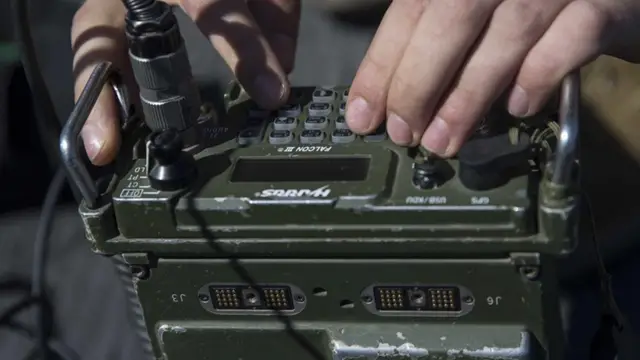
Pad printing is well suited for aerospace and defense component marking because a flexible silicone pad can transfer detailed images onto curved, recessed, textured, and irregular surfaces.
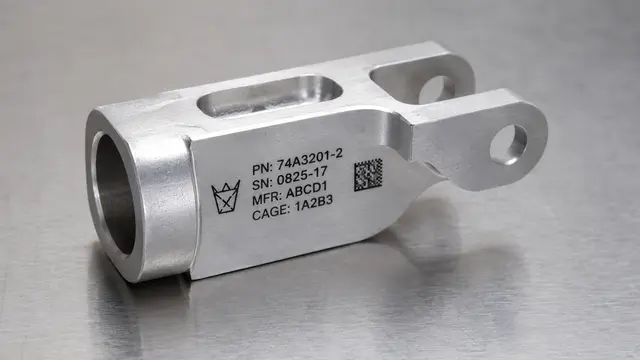
The process produces sharp, repeatable legends, symbols, serial numbers, scales, and identification marks on small or complex components that may be difficult to mark with conventional printing methods.
Automark pad printing equipment can also be configured to operate with customer-approved epoxy-based and MIL-STD ink systems, allowing manufacturers to maintain their established ink specifications while improving print consistency and production efficiency.
U.S. Marine Corps photo by Lance Cpl. Tawanya Norwood. Cropped for presentation and used for illustrative purposes. The appearance of U.S. Department of Defense imagery does not imply endorsement.
Advantages of Pad Printing for Aerospace and Defense Components
Repeatable Ink Transfer
The etched cliché and silicone pad provide consistent ink transfer for repeatable legends, symbols, logos, and identification marks.
Fine-Detail Printing
Pad printing reproduces small characters, scales, symbols, and detailed graphics with excellent clarity on compact components.
Complex Surface Printing
The flexible silicone pad conforms to curved, recessed, textured, and irregular surfaces that are difficult to mark using flat printing methods.
Efficient Small-Part Marking
Well suited for connectors, switches, housings, controls, and precision-machined aerospace and defense components.
Pad Printing Equipment for Customer-Approved MIL-STD and Epoxy Ink Systems
Supporting Aerospace and Defense Ink Specifications
Aerospace and defense manufacturers often work with ink systems that have already been tested, approved, and specified for a particular component or program. Changing those approved materials may be difficult or impractical.
Automark pad printing equipment can be configured to operate with customer-approved MIL-STD and epoxy-based ink systems, allowing manufacturers to maintain their established material specifications while improving print consistency, equipment reliability, and production efficiency.
Approved Ink Compatibility
Equipment configured to operate with customer-specified epoxy and MIL-STD ink systems.
Controlled Ink Transfer
Closed ink cup systems help maintain consistent ink condition and repeatable print performance.
Complete Machine Supplies
Automark supplies ink cups, ceramic rings, pads, clichés, fixtures, and other machine-related consumables.
Application and Process Support
Guidance on machine setup, pad selection, cliché preparation, fixtures, and print parameters.
Equipment Designed Around the Approved Printing Process
A successful aerospace or defense marking application depends on more than the ink alone. The machine, ink cup, ceramic ring, cliché, silicone pad, fixture, and print settings must work together as a controlled process.
Automark can supply the complete pad printing system and associated machine consumables while accommodating the ink formulation already approved for the customer’s application.
Common Aerospace and Defense Pad Printing Applications
Pad printing is widely used throughout aerospace and defense manufacturing for durable component identification and traceability marking. Typical applications include:
Electrical Connectors
Identification marks, pin references, logos, and part information on curved or compact connector housings.
Avionics Housings
Legends, symbols, and identification markings on electronic enclosures and control components.
Aircraft Interior Components
Durable markings on controls, trim components, safety-related parts, and cabin hardware.
Switches and Control Panels
Fine-detail printing for switches, buttons, dials, scales, and operator interfaces.
Precision-Machined Parts
High-resolution marking on aluminum, coated metal, and other precision-machined components.
Wire and Cable Components
Identification marks on connector bodies, strain-relief components, and related harness hardware.
Sensor and Instrument Housings
Clear identification and functional markings on compact housings and instrument components.
Defense Electronics Enclosures
Permanent legends, symbols, and traceability markings on rugged electronic housings and assemblies.
Pad printing is particularly effective when aerospace and defense components require small text, detailed symbols, precise positioning, or marking on curved and irregular surfaces.
Pad Printing Equipment for Aerospace and Defense Marking
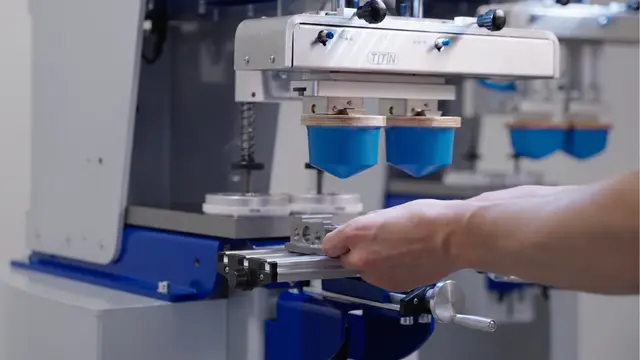
Reliable aerospace and defense part marking requires equipment capable of maintaining controlled ink transfer, accurate part positioning, and repeatable print cycles.
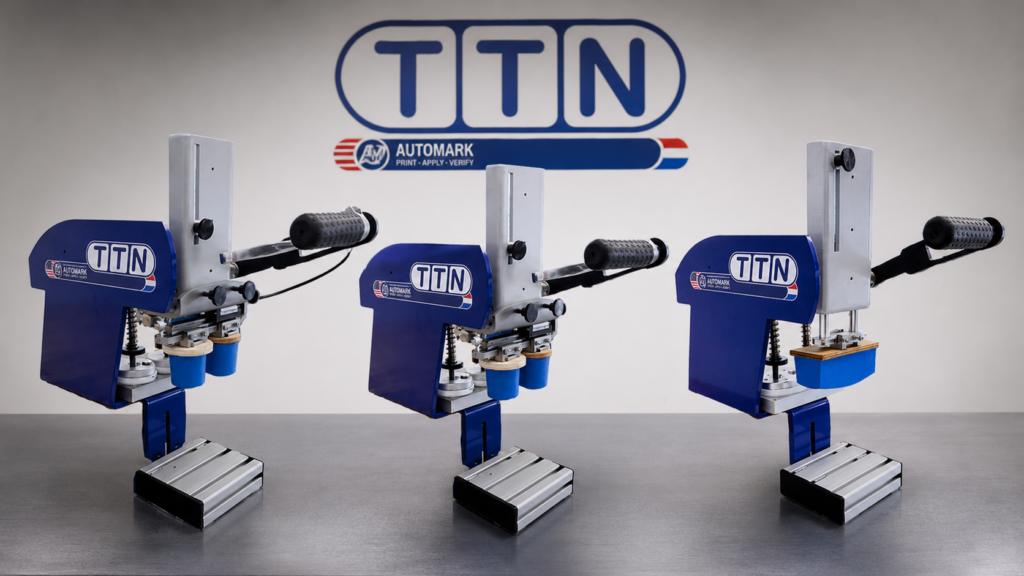
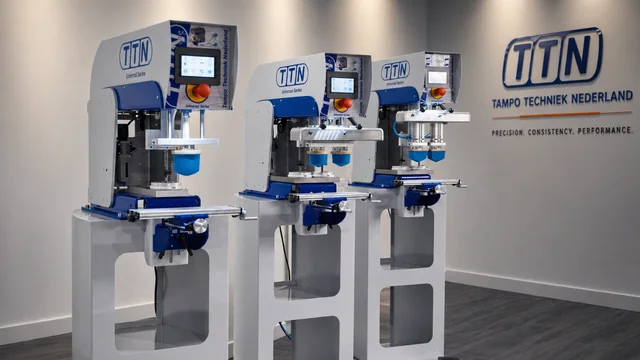
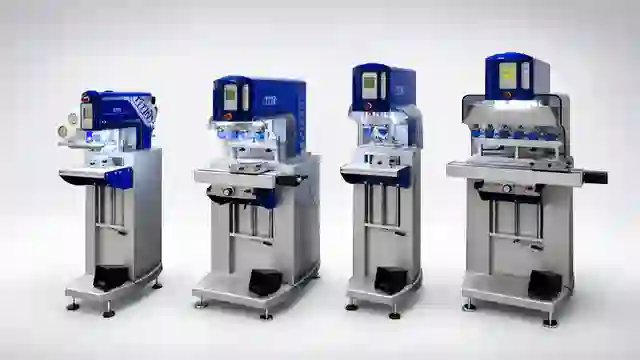
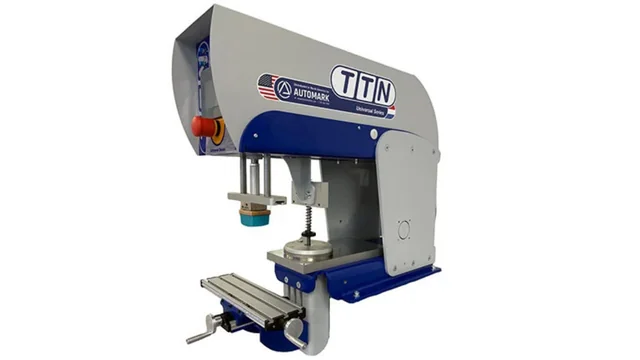
Automark offers manual, pneumatic, and automated pad printing systems that can be configured around the component geometry, production volume, required image area, and customer-approved ink specification.
Equipment Features for Precise, Repeatable Part Marking
When configured correctly, pad printing systems provide highly repeatable markings while maintaining the durability required for aerospace traceability.
Closed Ink Cup Systems
Help reduce solvent evaporation and maintain more consistent ink conditions throughout production.
Adjustable Print Parameters
Control pad pressure, stroke, speed, and dwell time for delicate, curved, or irregular components.
Precision Fixtures and Part Positioning
Custom fixtures, adjustable worktables, and registration controls support accurate and repeatable part placement.
Multiple Machine Configurations
Choose from manual, one-color, two-color, multicolor, and application-specific pad printing systems.
Automation and Production Integration
Machine I/O and automation options support part handling, higher production volumes, and integration into manufacturing cells.
High-resolution pad printing for connectors and precision parts.
Marking Curved or Irregular Surfaces
Pad printing conforms to complex geometries.
MIL-STD Ink Durability Requirements
Compatible with most epoxy MIL-STD ink systems. No requalification needed!
Chemical Resistance
Durable markings that withstand chemicals and abrasion.
Long-Term Traceability
Reliable marking on plastics, aluminum, and composites.
High-Volume Production
Automated pad printing for repeatable results.
Medical Pad Printers
Recommended Automark Systems
Based on the considerations above, the following machine configurations are commonly selected for medical marking applications, depending on print size, number of colors, and production volume.
HP Series Manual Pad Printers
Best for low-volume production, prototyping, and occasional one- or two-color printing. The compact, operator-controlled design provides dependable print quality without the cost or complexity of a pneumatic machine.
Best for low-volume production, prototyping, and occasional one- or two-color printing. The compact, operator-controlled design provides dependable print quality without the cost or complexity of a pneumatic machine.
Best for higher throughput, multi-color applications, and automation-ready medical marking programs where speed, repeatability, and multi-station options matter.
Yes. Automark pad printing equipment can be configured to operate with customer-specified MIL-STD and epoxy-based ink systems. Many aerospace and defense manufacturers must continue using materials that have already been tested and approved for a particular component or program.
Pad printing can mark electrical connectors, avionics housings, switches, control panels, sensor housings, machined metal parts, defense electronics enclosures, and other small or irregular components.
Yes. The flexible silicone pad conforms to curved, recessed, textured, and irregular surfaces that may be difficult to mark with flat printing methods.
Common markings include part numbers, serial numbers, legends, scales, symbols, logos, orientation marks, and other identification or traceability information.
Automark can supply pad printing machines, closed ink cups, ceramic rings, clichés, silicone pads, fixtures, worktables, and other machine-related consumables. Customer-approved ink may remain sourced from the specified supplier when required.
Yes. Automark can help with application testing, including ink selection, pad choice, cliché/plate setup, fixture considerations, and process recommendations before moving into production.
Yes. Pad printing can be used for catheter tubing, warning bands, scales, logos, and medical tube markings. For high-volume tubing applications, dedicated catheter tube pad printing systems may be recommended.
Pad printing systems can be configured for medical manufacturing environments, including cleanroom-focused applications. The exact configuration depends on the part, production volume, ink system, automation needs, and validation requirements.
Printing around the diameter of a barrel is somethign we specialize in. Printing length and diameter are discused and the optimal machine is then recommended. You can see our circumferential printers here.
Discuss your project
Need a Reliable Aerospace or Defense Part Marking Solution?
Automark helps aerospace and defense manufacturers implement reliable pad printing systems for precision component marking.
Our team can help determine the correct ink system, pad configuration, and printing equipment for your specific aerospace application.