Solvent-Free Ink Cup Cleaning
The only solvent-free ink cup cleaning system with internal recycling — no routine fluid replacement, no hazardous disposal fees, no ventilation required. Three systems from $10,995.
✓ VOC-Free • ✓ No Hazardous Disposal • ✓ No Routine Fluid Replacement • ✓ North America’s Pad Printing Authority
Simple 3-step process
Nanovis systems clean ink cups and printing plates in minutes — without solvents, without ventilation requirements, and without hazardous waste disposal. This eliminates operator health hazards and fire risk.
Place ink cups and baseplates into the cleaning system. The Nanovis cleaning agent is already inside — no measuring, no mixing, no solvent handling.
The system removes ink safely using a non-volatile, VOC-free cleaning agent. No flammable chemicals, no fumes, no special ventilation or storage requirements.
Components come out clean and ready for immediate reuse. The HC-1000 and NC Series recycle the cleaning solution internally — simply dispose of the filtered powder in normal trash.
The Hidden Cost of Solvent Cleaning
Traditional solvent-based ink cup cleaning is deeply embedded in pad printing operations — but the true cost goes far beyond the price of the solvent itself. Flammable cleaning materials require special storage, ventilation systems, and OSHA compliance documentation. Hazardous waste disposal events typically cost $150–$400 each, recurring quarterly. Operator exposure to VOCs creates ongoing health and liability risk.
A typical pad printing shop running two ink cup cleanings per day spends $3,000–$6,000 per year on solvents, disposal fees, and compliance overhead — costs that disappear entirely with a Nanovis system.
✗
Flammable Materials
Solvent-based cleaners require fire-safe storage, ventilation, and OSHA compliance documentation.
✗
Hazardous Waste Disposal
Disposal events cost $150–$400 each, typically recurring every month.
✗
Operator Health Risk
VOC exposure creates ongoing liability and may require respiratory PPE.
✗
Ongoing Fluid Replacement
Solvent must be purchased and replaced continuously — there is no recycling.
Side-by-Side Comparison
See exactly how traditional solvent-based cleaning compares to Nanovis across every dimension that matters to your operation.
| Feature | Solvent Cleaning | Nanovis System |
|---|---|---|
| Flammable Materials | ✗ Yes — fire risk | ✓ No |
| Hazardous Chemicals | ✗ Yes — VOCs, solvents | ✓ No — VOC-free |
| Cleaning Agent Replacement | ✗ Continuous purchase required | ✓ No routine replacement (HC-1000, NC Series) |
| Disposal Costs | ✗ High — $150–$400/event | ✓ Minimal — powder in normal trash |
| Operator Safety | ✗ Lower — chemical exposure | ✓ Higher — no hazardous exposure |
| Storage Requirements | ✗ Required — flammable storage | ✓ Not required |
| Ventilation Required | ✗ Yes | ✓ No |
| OSHA Compliance Burden | ✗ High | ✓ Minimal |
| Annual Operating Cost | ✗ $3,000–$6,000+ | ✓ Near zero after initial investment |
Why Nanovis
Beyond safety and compliance, Nanovis systems deliver measurable operational and financial advantages.
Remove flammable solvents from your production floor entirely. No fire risk, no ventilation systems, no hazardous storage cabinets.
Eliminate routine solvent purchasing, hazardous waste disposal fees, and OSHA compliance overhead — typically $3,000–$6,000/year in savings.
Protect operators from VOC exposure, chemical burns, and respiratory hazards. Reduce liability and simplify your safety documentation.
No hazardous waste classification, no special disposal events. The filtered powder is disposed of in normal trash.
HC-1000 and NC Series systems recycle the cleaning solution internally — maintaining cleaning performance while eliminating routine fluid replacement.
Ink cups and printing plates are cleaned quickly and returned to production — reducing downtime and keeping your pad printers running.
return on investment
Most buyers compare machine price. Experienced manufacturers compare total operating cost. Here is what a typical pad printing shop spends on solvent cleaning every year.
The Nanovis HC-1000 starts at $24,995. For a shop spending $5,000/year on solvent cleaning, the system pays for itself in under 5 years — and continues saving money every year after. Shops with higher solvent usage see payback in 2–3 years.
Our Cleaning Systems
Nanovis systems are sold through Automark application specialists. Request a quote or speak with our team to find the right system for your production volume and ink type.
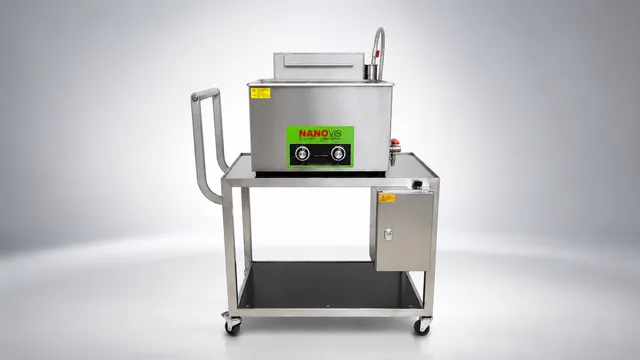
Compact, cost-effective solution for low-volume cleaning
Best for: Low-volume shops, entry-level users, or supplementing existing processes
Most popular
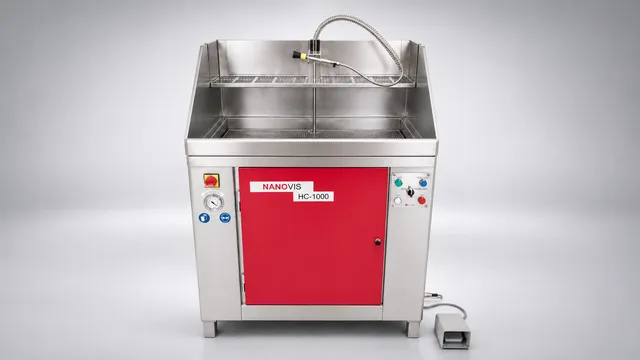
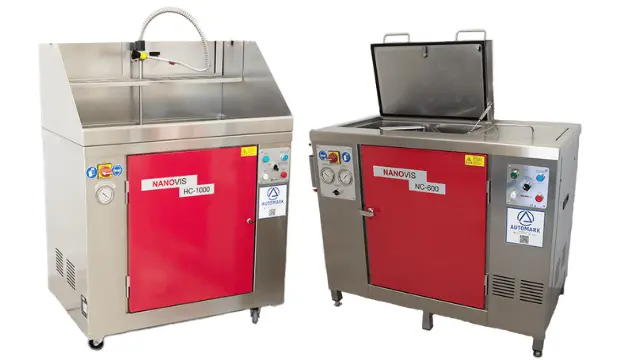
Our most popular solvent-free ink cup cleaning system with manual cleaning brushes
Best for: Production environments seeking cost savings, sustainability, and process consistency
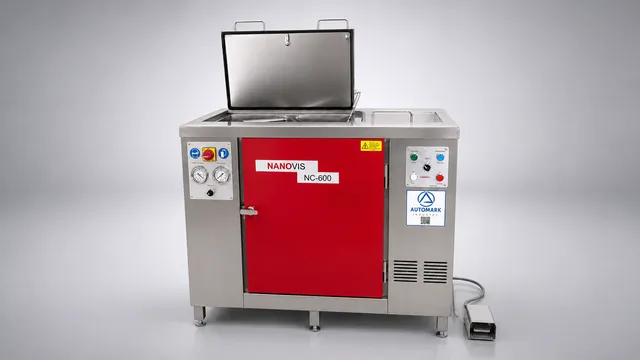
Fully automatic cleaning for high-volume production available in multiple sizes
Best for: High-volume production lines, automated cells, and continuous manufacturing environments
Not Sure Which System You Need?
Speak with our team to determine the best solution based on your production volume, ink type, part geometry, and workflow requirements.
Industry Recognition
As Featured In Plastics Decorating Magazine
“These machines allow for quick cleaning of ink from ink cups and printing plates to radically improve the turnaround time of production printing machinery — without the use of hazardous solvents.”
— Plastics Decorating Magazine, Tech Watch Feature
✓
North America’s Pad Printing Authority
Automark has distributed Nanovis systems into the largest pad printing operations in North America and has been in business since 2014. Nanovis has been supplying these systems for over 20 years in Europe and Asia.
✓
Application Specialists On Staff
Our team works closely with customers to recommend the right system based on cleaning volume, automation needs, and long-term operating goals.
✓
Installation and Training Included
We provide setup guidance, operator training, and support so your team can quickly integrate the system into daily production.
✓
Ongoing Support
We support customers with system questions, operating guidance, and recommendations related to recycling frequency and cleaning performance.
Frequently Asked Questions
Nanovis systems use a proprietary non-volatile, VOC-free cleaning agent that dissolves and removes pad printing ink without the use of flammable solvents. The cleaning agent is water-based and safe to handle without PPE.
For a shop spending $5,000/year on solvent cleaning and disposal, the HC-1000 pays for itself in approximately 4–5 years. Shops with higher solvent usage or more frequent disposal events typically see payback in 2–3 years.
In the HC-1000 and NC Series, the cleaning solution is circulated internally. Ink residues are filtered out through a proprietary powder system. The powder — containing the captured ink particles — is then disposed of in normal trash. The cleaning agent itself does not need routine replacement.
Yes. Nanovis systems are compatible with standard pad printing inks as well as UV-curable and LED-curable inks. Contact our team for specific compatibility guidance based on your ink system.
The Nanovis cleaning agent is non-hazardous, VOC-free, and non-flammable. It does not require hazardous waste classification for disposal. For specific regulatory certifications relevant to your industry or region, please contact our application specialists.
Yes. Nanovis systems are designed to clean both ink cups and printing plates (aluminum and steel clichés) in the same cleaning cycle, reducing total cleaning time and returning all components to production together.
The US-500 is a compact, entry-level unit for low-volume cleaning without internal recycling. The HC-1000 adds internal recycling for maximum cost efficiency in manual operations. The NC Series is a fully automatic spray system available in multiple sizes for high-volume production lines.
Yes — unlike the HC-1000 and NC Series, the US-500 does not use internal recycling, so the cleaning solution will need to be replaced periodically. It is the ideal entry point for shops not yet ready for full recycling integration, with a clear upgrade path to the HC-1000.
Most ink cup and plate cleaning operations are completed in minutes — significantly faster than manual solvent cleaning and without the drying time required after solvent use. See the HC-1000 clean in real-time.
Maintenance is minimal but does require replacing seals and filters routinely. The primary ongoing task is monitoring the powder filter in the HC-1000 and NC Series and replacing it when saturated. There is no routine fluid replacement, no solvent purchasing, and no hazardous waste scheduling required.
Get Started Today
Speak with an Automark application specialist to find the right Nanovis system for your production volume, ink type, and workflow. We can estimate your annual savings based on your current solvent usage.
Send us your information below and we’ll get back to you within one business day.