Pad Printing for Medical Devices
High-precision printing solutions for medical plastics, syringes, housings, and diagnostic components.
For high-volume production of medical tubing, see our Catheter Tube Pad Printing Systems.
- Catheter tubes
- Infusion tubing
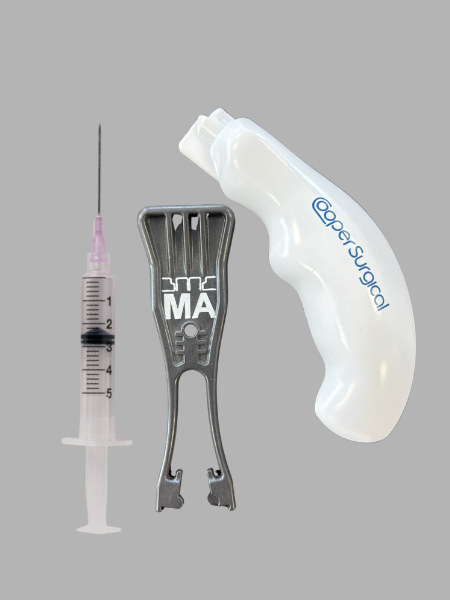
- Syringes
- Surgical instruments
- Diagnostic equipment housings
Why Pad Printing Works for Medical Devices
Medical device components often have tight tolerances, small print areas, and curved surfaces that are difficult to mark consistently with other processes. Pad printing uses a flexible silicone pad to transfer ink from an etched plate onto complex geometries, making it ideal for medical applications where alignment and legibility matter.
Prints on curved and irregular surfaces (barrels, caps, housings)
Supports fine detail (small text, logos, icons, graduation marks)
Highly repeatable registration for controlled processes
Works on many medical plastics (PP, PC, ABS) with the right ink system
Common Medical Components We Print
Syringes and Plungers
Pad printing is ideal for adding precise measurement markings, branding, and traceability information on syringes and plungers. The process ensures clear, durable graduations that remain legible throughout use and sterilization while maintaining tight tolerances on curved surfaces.
Diagnostic Housings
Diagnostic device housings often require logos, instructions, and identification marks on complex plastic enclosures. Pad printing delivers consistent, high-quality graphics on textured or contoured surfaces without compromising the integrity of the part.
IV Components
IV connectors, clamps, and ports frequently need small but highly legible markings for identification and safety. Pad printing provides precise, repeatable results on these small geometries while maintaining strong ink adhesion on medical-grade materials.
Surgical Instrument Handles
Surgical instrument handles require durable markings that can withstand repeated cleaning and sterilization cycles. Pad printing produces sharp logos, part numbers, and orientation marks that remain intact without affecting grip or performance.
Lab Equipment Panels
Lab equipment panels often include detailed graphics, icons, and instructional text that must be easy to read and long-lasting. Pad printing allows for fine detail reproduction and consistent placement across production runs, ensuring a professional and functional finish.
Catheter Connectors
Catheter connectors typically have tight spaces and complex shapes that demand precise marking solutions. Pad printing enables clean, controlled ink application for identification marks without adding excess material that could interfere with assembly or function.
Â
Medical Materials Compatible with Pad Printing
Polypropylene (PP)
A widely used material for syringes, caps, and disposable components due to its chemical resistance and flexibility. With proper ink selection and surface treatment when needed, pad printing achieves reliable adhesion on PP.
Polycarbonate (PC)
Known for its strength and clarity, polycarbonate is commonly used in diagnostic housings and transparent components. Pad printing produces sharp, durable markings that maintain clarity without compromising the material’s appearance.
ABS
ABS is frequently used for medical device enclosures because of its durability and ease of molding. It accepts inks well, allowing for consistent, high-quality graphics and text.
PTFE (polytetrafluoroethylene)
PTFE is a chemically inert, biocompatible plastic used in medical devices for its low friction, resistance to sterilization, and dimensional stability, making it ideal for catheters, guidewires, and seals. Its non-stick surface ensures smooth movement and reliable performance in critical applications.
PEBAX
PEBAX is a flexible, biocompatible thermoplastic used in medical devices for its excellent strength-to-weight ratio, chemical resistance, and compatibility with sterilization. It’s ideal for catheters, tubing, and minimally invasive devices where flexibility and durability are critical.
PEEK (polyether ether ketone)
PEEK is a high-performance, biocompatible plastic used in medical devices for its exceptional strength, chemical resistance, and ability to withstand repeated sterilization. It’s ideal for implants, surgical instruments, and components requiring long-term durability and dimensional stability.
Silicone parts, such as seals and flexible components, require specialized inks designed for low-surface-energy materials. Pad printing can achieve strong adhesion while maintaining the flexibility of the part.
Coated Metals
Coated aluminum and stainless steel components are often used in surgical tools and equipment panels. Pad printing delivers precise markings that bond well to coated surfaces and withstand repeated cleaning cycles.
Medical-Grade Plastics
Many engineered medical plastics are specifically formulated for performance and compliance. Pad printing works effectively across these materials with the right ink chemistry to ensure durability and legibility.
Proper adhesion depends on selecting the correct ink system and, in some cases, using surface treatments like corona, plasma, or flame treatment to increase surface energy. Testing is typically recommended to confirm durability under sterilization, cleaning, and real-world use conditions.

Important Considerations When Selecting a Pad Printing Machine for Medical Devices
Medical device production often introduces additional requirements beyond print quality alone, such as cleanability, process repeatability, and compatibility with cleaning agents or sterilization methods. Below are key factors teams commonly evaluate when selecting equipment for medical marking applications.
Cleanability and Contamination Control
Smooth, wipeable surfaces
Fewer crevices where residue can collect
Easy access for cleaning around fixtures and print area
Materials that tolerate cleaning agents
If your process occurs in a controlled environment (or requires frequent cleaning), prioritize machines designed with easy-to-clean surfaces and minimal areas where ink residue can accumulate. Features such as corrosion-resistant and anodized components, and hardware choices that withstand cleaning cycles, can help support consistent cleaning procedures.
Materials and Ink Adhesion on Medical Plastics
PP is hard to print on without correct ink/pretreatment
PC/ABS generally easier
surface energy / pretreatmentÂ
chemical resistance requirements
Medical parts are commonly molded from polypropylene, polycarbonate, and ABS—each with different adhesion behavior. Selecting the right ink system (and any necessary surface preparation) is critical for durability, especially if the mark must remain readable after handling, cleaning, or sterilization steps.
Sterilization and Chemical Resistance Requirements
EtO, gamma, autoclaveÂ
alcohol wipe resistance / disinfectants
test marks on sample parts
If printed parts will be exposed to sterilization or disinfectants, evaluate ink resistance early. Many teams validate print durability through simple tests on representative parts before finalizing equipment and ink selection.
Precision, Registration, and Fine Detail
stable mechanics
controlled pad pressure
repeatable fixturing
crisp graduation marks
Graduations, small text, and symbols require stable registration and consistent ink transfer. Consider machines with robust mechanical stability and repeatable fixture positioning, especially for parts with small print areas or multiple print locations.
Process Repeatability and Validation Support
consistent setup
repeatable adjustments
documentation readinessÂ
Medical manufacturers often value repeatability because it supports documented processes. A machine that allows consistent setup and repeatable adjustments can reduce variation across shifts and operators.
Â
Volume, Automation, and Scalability
manual vs semi-auto
throughput requirements
future automation
Match the platform to your volume needs. Some programs begin with short runs and later scale; choosing equipment that can grow with production requirements can reduce future changeovers or requalification effort.
Medical-Grade Inks and Regulatory Considerations
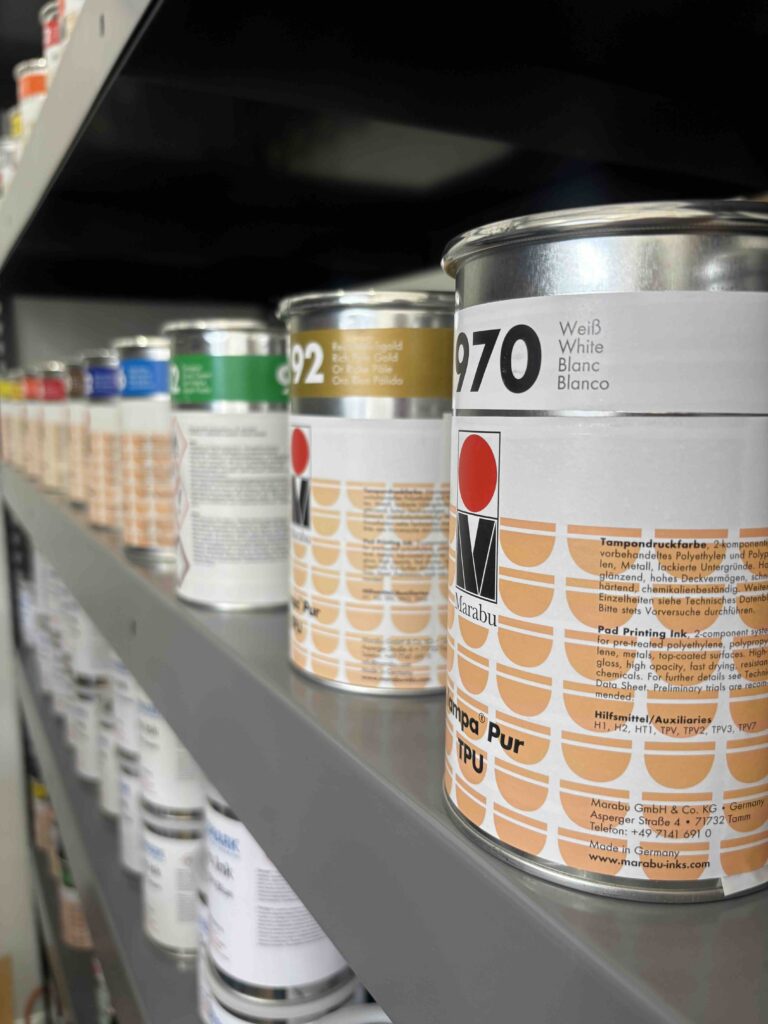
Medical device printing inks must maintain legibility and adhesion while withstanding sterilization, chemical exposure, and regulatory validation. When evaluating medical device printing ink, manufacturers typically compare UV-curable and solvent-based systems based on substrate compatibility, durability requirements, and process conditions.
UV ink for medical devices cures via photopolymerization, forming a densely cross-linked film that provides high surface hardness, strong abrasion resistance, and excellent chemical durability. Properly cured UV systems generally demonstrate strong resistance to isopropyl alcohol, disinfectants, and repeated wipe testing, making them well suited for high-throughput production where consistent curing control is achievable.
Solvent ink for medical devices cures through solvent evaporation and resin crosslinking, producing a more flexible ink film with strong adhesion to substrates such as ABS, polycarbonate, and other engineering plastics. This flexibility can improve performance on components subject to mechanical stress or slight deformation while still providing robust chemical resistance when properly specified.
Sterilization compatibility is a primary selection factor, as printed components may be exposed to ethylene oxide (EtO), gamma radiation, steam autoclave cycles, or chemical sterilants. Both UV and solvent systems can be formulated for specific sterilization environments, but performance is dependent on ink chemistry, pigment stability, cure parameters, and substrate interaction. Validation testing under actual process conditions is required.
For applications requiring biocompatibility evaluation, certain ink systems from Marabu have been tested to USP Class VI criteria and can provide supporting documentation such as extractables data and material traceability. Final compliance, however, must be confirmed at the finished device level in accordance with applicable regulatory pathways.
Selection between UV and solvent ink should be based on chemical exposure profile, sterilization method, adhesion requirements, and available validation data to ensure long-term performance in the intended medical environment.
Recommended Pad Printing Machines for Medical Devices
Based on the considerations above, the following machine configurations are commonly selected for medical marking applications, depending on print size, number of colors, and production volume.
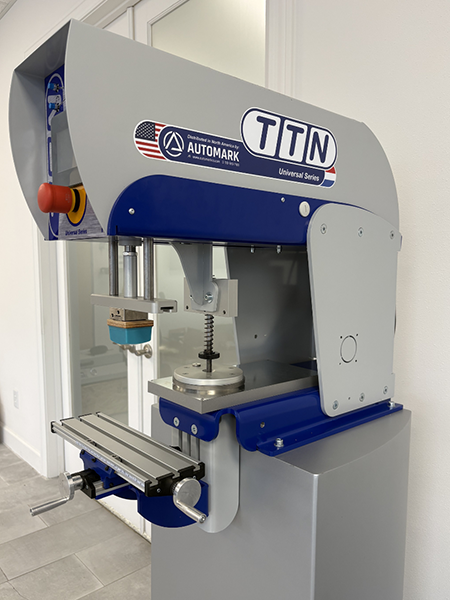
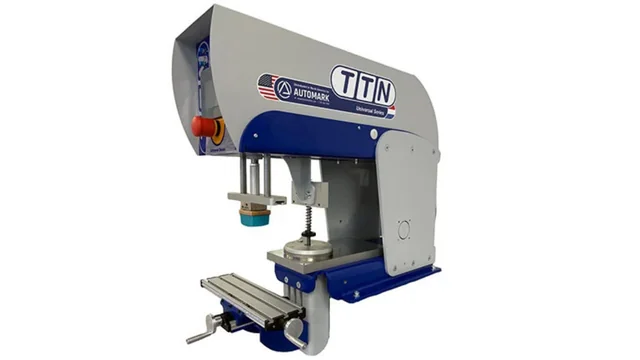
Universal Series Pad Printer (1–2 color)
Best for: entry-level to mid-volume, single or two-color marks, compact footprint
Why it fits medical: stable printing, repeatable setup, excellent value vs low-cost imports
Professional Series Pad Printer
Best for: higher throughput, multi-color, automation-ready
Why: speed, repeatability, multi-station options
Medical Pad Printing FAQs
What medical devices use pad printing?
Pad printing is commonly used to mark medical devices such as catheters, syringes, surgical instruments, diagnostic housings, tubing, implantable components, and handheld medical electronics. It is ideal for printing on small, curved, or irregular surfaces where precision, legibility, and permanence are critical.
Is pad printing safe for medical manufacturing?
Yes. When implemented correctly, pad printing is safe for medical manufacturing and can meet regulatory and quality standards such as FDA and ISO 13485 requirements. Medical-grade inks, controlled environments, and validated processes ensure markings are biocompatible, durable, and compliant with industry regulations.
Can pad printing be used in cleanrooms?
Yes, pad printing systems can be configured for use in cleanroom environments. Equipment can be designed to minimize particulate generation, use enclosed ink systems, and integrate with ISO-classified cleanrooms to support sterile or controlled manufacturing processes.
What inks are used for medical plastics?
Medical pad printing typically uses specialized inks formulated for adhesion to plastics such as PEEK, PTFE, PEbax, polycarbonate, and polypropylene. These inks are designed to withstand sterilization methods including autoclaving, gamma irradiation, and ethylene oxide (EtO) without fading or degrading.
How durable are pad printed markings?
When properly engineered, pad printed markings are highly durable and resistant to abrasion, chemicals, and sterilization cycles. Ink selection, surface preparation, and curing methods play a critical role in ensuring long-term legibility and performance in clinical and surgical environments.